From the Wasatch Front to the Last Frontier

$700K awarded to take AI-powered hydrology research to Alaska’s remote rivers


Alaska: Famed for its dramatic landscapes, stunning glaciers, colossal mountains, and abundant wildlife. Yet equally striking is the sheer scale of its river systems. With more than 365,000 miles of rivers, Alaska is home to over 40% of the nation’s surface water.

These rivers do far more than move water—they sustain entire ecosystems. From salmon that nourish forests and wildlife to communities that depend on predictable seasonal flows, Alaska’s rivers shape life far beyond their banks. Yet despite their importance, they remain some of the least monitored and modeled waterways in the United States.

Thanks to a new research grant, University of Utah faculty member Ryan Johnson and his students are helping change that.

The ~$700K grant awarded from the National Water Prediction Service will support a hands-on research effort in Southcentral and Southeastern Alaska, where Johnson and his team will work directly with local communities, fisheries managers, and federal partners to develop next-generation tools for predicting streamflow and water temperature in data-scarce regions.

The work aims to improve ecosystem health, fisheries management, infrastructure protection, and emergency response planning—helping decision-makers anticipate change rather than react to it.


Forecasting the Unknown

At the heart of Johnson’s research is a deceptively simple question: How do you make reliable predictions when there’s very little data?

Traditional hydrologic models depend on long-term monitoring records—something Alaska often lacks due to its extreme remoteness and expansive terrain. Johnson’s team is tackling this challenge by combining machine learning (ML) and artificial intelligence (AI) with observational data from similar environments around the planet to bypass the limited regional data, a technique known as transfer learning.

“Transfer learning allows us to train our ML models to regions with similar hydrology and apply it to places where observations are limited, as in Southcentral and Southeast Alaska,” Johnson explained. “It’s a way to expand predictive capability without waiting decades to collect new data.”

The research will contribute to expanding the National Water Model (NWM) into Alaska—a much needed integration, yet one that presents major scientific and operational hurdles.


Why Streamflow—and Temperature—Matter

The project focuses on two critical predictions:

  • Streamflow, which informs flood forecasting, emergency response, and wildlife management
  • Stream temperature, a key indicator of ecosystem health—particularly for salmon

Salmon are often considered a keystone species in Alaska’s river systems and an essential element of Alaskan life, culture, and tourism. Their life cycle connects oceans, rivers, forests, and wildlife, transporting nutrients inland and supporting everything from aquatic insects to birds and large mammals. Even small changes in water temperature or streamflow can disrupt this balance.

Water temperature thresholds can also trigger emergency regulations, such as temporary fishing closures designed to protect vulnerable salmon populations. With several salmon species already under stress, better temperature forecasts could help agencies act earlier and more precisely.

“Having more accurate streamflow and stream temperature predictions provides natural resource managers with critical information for making informed decisions that maintain healthier fisheries and create resilient communities,” Johnson said.


Use-Inspired Model Development

A defining feature of the project is its use-inspired model development—building scientific tools around the real needs of the people who rely on them.

Johnson’s team is partnering closely with local fisheries, nonprofits, regional stakeholders, and the Alaska Pacific River Forecasting Center (APRFC) to ensure the models are both scientifically robust and operationally useful.

“We’re able to work with end users from the beginning so the tools we build actually serve the people making decisions on the ground,” said Kaitlin Meyer and Liza McLatchy, two University of Utah civil & environmental engineering Ph.D. students involved in the project.

The collaboration also gives Johnson and his students the opportunity to collaborate with experts across institutions, including Martyn Clark of the University of Alberta, widely regarded as one of the world’s foremost hydrologic modelers.


Fieldwork at the Last Frontier

The research will take place during two key windows in Alaska’s hydrologic year:

  • May, during peak snowmelt season
  • August, when rivers experience low flows and glacier-driven contributions dominate

These field campaigns will give students firsthand experience in cold-region hydrology—working at the intersection of water, environment, data science, and real-world impact.

In Alaska, protecting salmon means protecting entire ecosystems. By improving how we forecast rivers today, this research helps ensure those ecosystems—and the communities that depend on them—can thrive tomorrow.

Fengze Yang at the ITE Conference

Fengze Yang, left, networking at the ITE Conference.

Shouzheng Pan at the ITE Conference

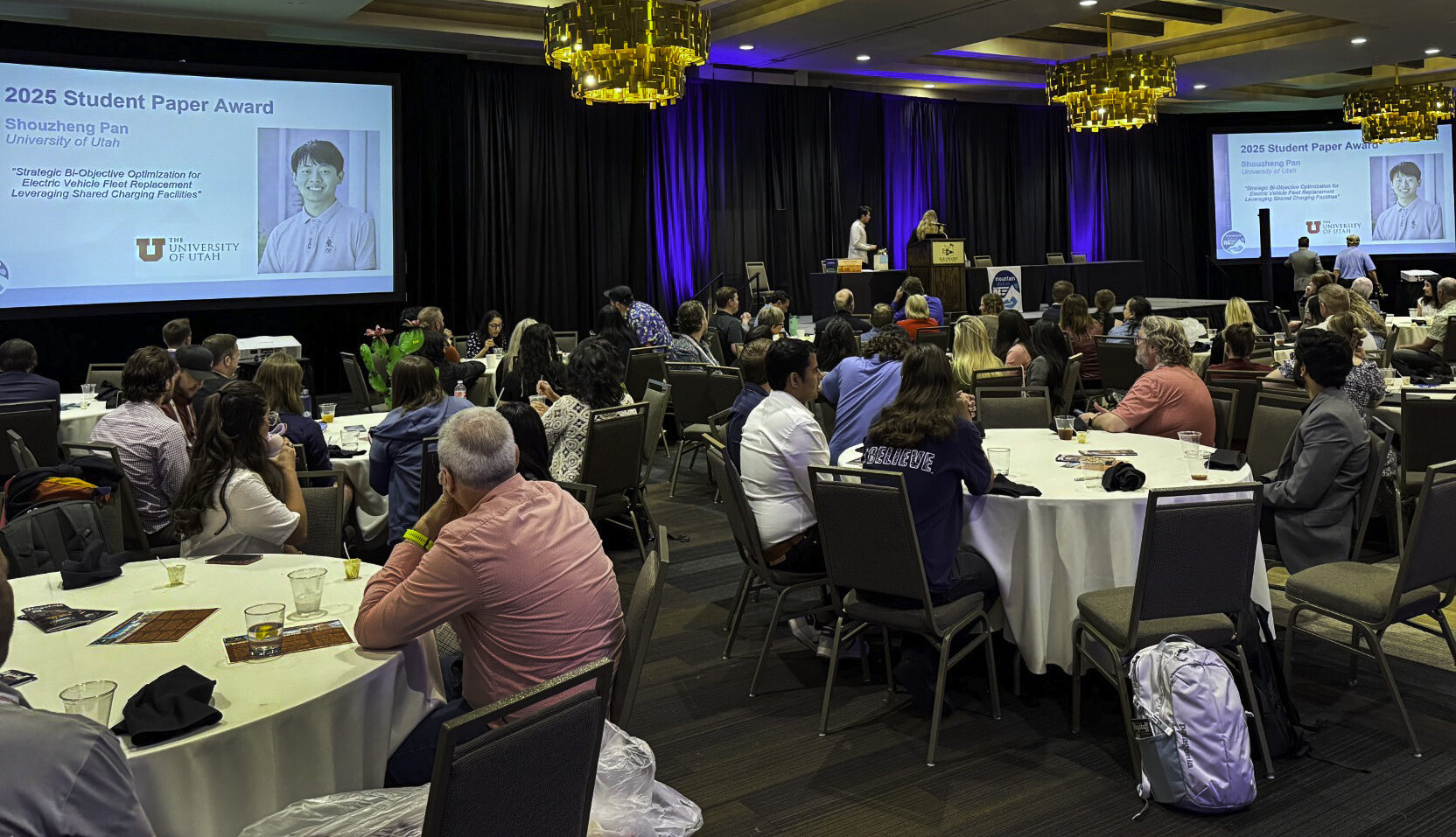
Shouzheng Pan, right, receiving the Best Paper Award.

More news from our Department


""

“The Future is Bright” – Dr. David Sanders Is CvEEN’s First Distinguished Seminar Series Speaker of the Semester

  The Department of Civil & Environmental Engineering was proud to host Dr. David Sanders, Greenwood Department Chair and Professor of Civil, Construction and Environmental Engineering at Iowa State University, for a seminar on September 5, 2025. His talk, titled “Where is Civil, Construction and Environmental Engineering Research Headed?”, drew a standing-room-only crowd in the […]

""

Shouzheng Pan Wins National Student Paper Award

CvEEN Ph.D. Student Shouzheng Pan has won ITE’s Daniel B. Fambro Student Paper Award—a rare achievement he shares with his advisor The Department of Civil & Environmental Engineering is proud to congratulate Ph.D. candidate Shouzheng Pan on receiving the 2025 Daniel B. Fambro Student Paper Award from the Institute of Transportation Engineers (ITE). This national […]

The University of Utah's TRIGA Reactor

Positioning the University of Utah’s Nuclear Reactor as a Key Site for Radiation Testing

One Ph.D. student’s research is redefining radiation testing at the University of Utah’s TRIGA Reactor (UUTR) Radiation hardness testing is used to evaluate how well materials—such as sensors, microchips, and other essential tech used in nuclear science—can withstand radiation without failing. Testing a materials’ resilience to radiation helps us develop more advanced technologies to use […]

Three Student Researchers

Student-Led Research is Fueling the Future

Three Student Researchers Earn National Recognition for Nuclear Engineering Three University of Utah students from Dr. Michael Simpson’s research group have been named winners in the U.S. Department of Energy’s 2025 Innovation in Nuclear Student Competition—placing Utah among just three universities nationwide with more than one student recognized. The national competition honors student-authored research papers […]

Connect With Us

Transportation Systems That Think Ahead

How engineers are reimagining street safety for communities of all kinds


Traffic crashes remain one of the leading causes of injury and death across communities of all sizes—from dense urban corridors to rural and tribal lands. A central challenge in transportation safety is the inability to anticipate risks before they become deadly. Strengthening that foresight would allow communities to intervene earlier—preventing crashes rather than reacting to them.

Researchers at the University of Utah are tackling this challenge head-on with two newly awarded federal grants that bring advanced artificial intelligence (AI), vehicle-to-everything (V2X) technology, and real-time sensing into transportation safety planning and decision-making.

Just before Christmas Eve, the U.S. Department of Transportation (USDOT) announced nearly $1 billion in funding through its highly competitive Safe Streets and Roads for All (SS4A) grant program. The University of Utah will lead one major award, as well as play a large role in a second project, awarded to support safer streets across Utah and California.

To achieve their goals, both projects will focus specifically on multimodal safety data collection, predictive sensing demonstrations, and real-time alert systems designed to inform future safety investments and policy decisions.


Designing Streets That Think Ahead: AI and V2X Powering Predictive Technologies

The University of Utah-led project, “Integrated AI Computing and V2X Infrastructure Systems for Safer Streets,” was awarded $3.99 million in federal funding.

The project’s inventiveness stems from the perceptive shift from reactive safety measures to focusing instead on how we can create predictive technologies that could provide real-time warnings. By integrating AI-powered computing with connected infrastructure, these tools will support the development and update of Comprehensive Safety Action Plans—a cornerstone of the SS4A program—while also demonstrating how emerging technologies can improve outcomes for drivers, pedestrians, cyclists, and transit users.

The University of Utah-led SS4A project is being steered by Cathy Liu (PI) and Chenxi Liu (Co-PI)—both professors in the Department of Civil & Environmental Engineering (CvEEN)—in partnership with public agencies including Utah Department of Transportation, Wasatch Front Regional Council, Salt Lake City, Garfield County, the Trinidad Rancheria, industry partner AIWaysion, and university collaborators at Johns Hopkins University and Rensselaer Polytechnic Institute.

Work will span diverse communities and various transportation settings, including:

  • Salt Lake City
  • Garfield County
  • The Trinidad Rancheria


Collaborating on Safety Solutions for Tribal Lands: Protecting Lives Through Real-Time Hazard Detection

The University of Utah is also a key partner on a second SS4A award led by the Cher-Ae Heights Indian Community of the Trinidad Rancheria in California. That project, “Advancing Vision Zero on Tribal Lands through Real-Time Hazard Detection and Behavior Monitoring,” received $1.6 million in funding.

This three-year effort focuses on improving safety along Scenic Drive and five locations on U.S. Highway 101, where landslide risk and traffic behavior pose serious safety challenges. The project will deploy:

  • AI-enabled geotechnical sensors
  • AI-driven landslide alerts
  • Multimodal traffic sensing
  • Intelligent roadside warning systems

Data from these systems will feed into a centralized platform to evaluate outcomes and guide updates to the Tribe’s Comprehensive Safety Action Plan. Represented by CvEEN faculty members Chenxi Liu (PI), Tong Qiu (Co-PI), and Cathy Liu (Co-PI), the University of Utah will serve as a subcontractor on this project.


Research Leadership and Collaboration

Together, these projects highlight how interdisciplinary research, strong community partnerships, and emerging technologies can reshape how transportation agencies understand risk—and take action—to save lives.

Fengze Yang at the ITE Conference

Fengze Yang, left, networking at the ITE Conference.

Shouzheng Pan at the ITE Conference

Shouzheng Pan, right, receiving the Best Paper Award.

More news from our Department


""

“The Future is Bright” – Dr. David Sanders Is CvEEN’s First Distinguished Seminar Series Speaker of the Semester

  The Department of Civil & Environmental Engineering was proud to host Dr. David Sanders, Greenwood Department Chair and Professor of Civil, Construction and Environmental Engineering at Iowa State University, for a seminar on September 5, 2025. His talk, titled “Where is Civil, Construction and Environmental Engineering Research Headed?”, drew a standing-room-only crowd in the […]

""

Shouzheng Pan Wins National Student Paper Award

CvEEN Ph.D. Student Shouzheng Pan has won ITE’s Daniel B. Fambro Student Paper Award—a rare achievement he shares with his advisor The Department of Civil & Environmental Engineering is proud to congratulate Ph.D. candidate Shouzheng Pan on receiving the 2025 Daniel B. Fambro Student Paper Award from the Institute of Transportation Engineers (ITE). This national […]

The University of Utah's TRIGA Reactor

Positioning the University of Utah’s Nuclear Reactor as a Key Site for Radiation Testing

One Ph.D. student’s research is redefining radiation testing at the University of Utah’s TRIGA Reactor (UUTR) Radiation hardness testing is used to evaluate how well materials—such as sensors, microchips, and other essential tech used in nuclear science—can withstand radiation without failing. Testing a materials’ resilience to radiation helps us develop more advanced technologies to use […]

Three Student Researchers

Student-Led Research is Fueling the Future

Three Student Researchers Earn National Recognition for Nuclear Engineering Three University of Utah students from Dr. Michael Simpson’s research group have been named winners in the U.S. Department of Energy’s 2025 Innovation in Nuclear Student Competition—placing Utah among just three universities nationwide with more than one student recognized. The national competition honors student-authored research papers […]

Connect With Us

Tackling the Next Frontier of Nuclear Transport

Solving the Transportation Problem for Microreactors with Digital Twin


Microreactors are quickly shifting from sci-fi-adjacent prototypes to one of the most promising tools in America’s clean-energy toolkit. Roughly the size of a shipping container, these next-gen nuclear systems can deliver reliable power to remote communities, military bases, disaster zones, or industrial sites—without the massive infrastructure required by traditional nuclear plants.

But there’s one major challenge that needs to be solved before the full extent of this potential can be unlocked: how do you safely move a nuclear reactor down a highway?

It’s a question the nation is racing to answer. Microreactors offer extraordinary opportunities—portable clean energy, rapid deployment, and resilient power—but they also demand new approaches to safety, monitoring, and transportation. Ensuring the public, regulators, and industry have full confidence in this technology means rethinking how engineers track and validate reactor conditions in real time.

That’s where researchers at the University of Utah are making headway.


U Team Wins ARPA-I Ideas and Innovation Challenge Stage 1

A University of Utah Civil & Environmental Engineering team has been named among the Stage 1 winners of the ARPA-I Ideas and Innovation Challenge, a national competition pushing forward transformative transportation technologies.

The U’s winning project, “Energy in Motion: Atoms on Wheels – Safe, Monitored Transportation of Microreactors,” unites an interdisciplinary group led by Assistant Professor Vince Wang, Professor Cathy Liu, and Dr. Ted Goodell, Director of the University of Utah Nuclear Reactor Facility.

This project represents a rare fusion of transportation engineering expertise and nuclear engineering innovation—showcasing the full strength of the CvEEN Department, which includes the Utah Nuclear Engineering Program (UNEP).


A First-of-Its-Kind Digital Twin for Nuclear Transport

As microreactors move from design labs to highways, the team is developing the nation’s first digital twin built specifically for transporting microreactors by semi-truck. This virtual model integrates real-time sensing, predictive analytics, and secure data flows to enhance public safety and bolster regulatory trust.

The digital twin will track:

  • Radiation and shielding performance
  • Vessel and environmental temperature
  • Weather and road conditions
  • Potential hazardous conditions

Instead of relying on static, offline estimates, trainees and operators will be able to access live, interactive, and actionable data during training or transport—while sensitive commercial information remains protected through NDAs and University legal mechanisms.

Over the course of a two-phase development plan—which in sum will occur over 3 years and $320K in funding—key metrics will include reduced operator training time, improved safety insights for drivers, and enhanced monitoring capacity during transport.

By enabling safe, monitored, and scalable microreactor transportation, the project supports U.S. clean-energy goals and advances an emerging nuclear-technology sector.

The team will travel to Washington, D.C. this week to deliver their Phase 2 pitch.

Fengze Yang at the ITE Conference

Fengze Yang, left, networking at the ITE Conference.

Shouzheng Pan at the ITE Conference

Shouzheng Pan, right, receiving the Best Paper Award.

More news from our Department


""

“The Future is Bright” – Dr. David Sanders Is CvEEN’s First Distinguished Seminar Series Speaker of the Semester

  The Department of Civil & Environmental Engineering was proud to host Dr. David Sanders, Greenwood Department Chair and Professor of Civil, Construction and Environmental Engineering at Iowa State University, for a seminar on September 5, 2025. His talk, titled “Where is Civil, Construction and Environmental Engineering Research Headed?”, drew a standing-room-only crowd in the […]

""

Shouzheng Pan Wins National Student Paper Award

CvEEN Ph.D. Student Shouzheng Pan has won ITE’s Daniel B. Fambro Student Paper Award—a rare achievement he shares with his advisor The Department of Civil & Environmental Engineering is proud to congratulate Ph.D. candidate Shouzheng Pan on receiving the 2025 Daniel B. Fambro Student Paper Award from the Institute of Transportation Engineers (ITE). This national […]

The University of Utah's TRIGA Reactor

Positioning the University of Utah’s Nuclear Reactor as a Key Site for Radiation Testing

One Ph.D. student’s research is redefining radiation testing at the University of Utah’s TRIGA Reactor (UUTR) Radiation hardness testing is used to evaluate how well materials—such as sensors, microchips, and other essential tech used in nuclear science—can withstand radiation without failing. Testing a materials’ resilience to radiation helps us develop more advanced technologies to use […]

Three Student Researchers

Student-Led Research is Fueling the Future

Three Student Researchers Earn National Recognition for Nuclear Engineering Three University of Utah students from Dr. Michael Simpson’s research group have been named winners in the U.S. Department of Energy’s 2025 Innovation in Nuclear Student Competition—placing Utah among just three universities nationwide with more than one student recognized. The national competition honors student-authored research papers […]

Connect With Us

Ryan Johnson Named One-U RAI Fellow for AI Applications in Water Resources Engineering


The One-U Responsible Artificial Intelligence Initiative (One-U RAI) at the Scientific Computing and Imaging Institute (SCI) has selected a new cohort of faculty fellows — including Dr. Ryan Johnson from our Department of Civil & Environmental Engineering (CvEEN).

Johnson was recognized under the “Environment” thematic area for his work combining AI, hydroinformatics, and sustainability in water resources engineering.

Johnson’s research leverages AI to address water-resource challenges in the arid West, focusing on snow mapping, streamflow monitoring, and predictive modeling to inform water management.

“My work is driven by the need to integrate technical innovation with long-term sustainability,” he said. He uses AI-optimized monitoring stations, machine learning, and edge computing—processing data at potentially remote stations, as opposed to the cloud, to allow for real-time analysis.

Holding a PhD in civil and environmental engineering from the University of Utah, Johnson recently developed a hydroinformatics course that covers data science and computing while grounding students in responsible AI. As a fellow, he will develop auditable AI models for the Upper Colorado Basin—incorporating demographic data to prevent social or economic biases in decision-making—and create open-source tools to push his field forward.

With this fellowship, our department reinforces its commitment to sustainable infrastructure and water-resource resilience. We’re proud to support Ryan as he leverages cutting-edge AI to help secure water for communities across the West.

As part of the 2025 cohort of 12 One-U RAI Fellows selected campus-wide, five were from the Price College of Engineering — underscoring the College’s leadership in responsible AI research and application.

Learn more about the full cohort of One-U RAI Fellows across campus.

Ryan Johnson in the Hyrdaulics Lab

Ryan Johnson in the Hyrdaulics Lab.


Fengze Yang at the ITE Conference

Fengze Yang, left, networking at the ITE Conference.

Shouzheng Pan at the ITE Conference

Shouzheng Pan, right, receiving the Best Paper Award.

More news from our Department


""

“The Future is Bright” – Dr. David Sanders Is CvEEN’s First Distinguished Seminar Series Speaker of the Semester

  The Department of Civil & Environmental Engineering was proud to host Dr. David Sanders, Greenwood Department Chair and Professor of Civil, Construction and Environmental Engineering at Iowa State University, for a seminar on September 5, 2025. His talk, titled “Where is Civil, Construction and Environmental Engineering Research Headed?”, drew a standing-room-only crowd in the […]

""

Shouzheng Pan Wins National Student Paper Award

CvEEN Ph.D. Student Shouzheng Pan has won ITE’s Daniel B. Fambro Student Paper Award—a rare achievement he shares with his advisor The Department of Civil & Environmental Engineering is proud to congratulate Ph.D. candidate Shouzheng Pan on receiving the 2025 Daniel B. Fambro Student Paper Award from the Institute of Transportation Engineers (ITE). This national […]

The University of Utah's TRIGA Reactor

Positioning the University of Utah’s Nuclear Reactor as a Key Site for Radiation Testing

One Ph.D. student’s research is redefining radiation testing at the University of Utah’s TRIGA Reactor (UUTR) Radiation hardness testing is used to evaluate how well materials—such as sensors, microchips, and other essential tech used in nuclear science—can withstand radiation without failing. Testing a materials’ resilience to radiation helps us develop more advanced technologies to use […]

Three Student Researchers

Student-Led Research is Fueling the Future

Three Student Researchers Earn National Recognition for Nuclear Engineering Three University of Utah students from Dr. Michael Simpson’s research group have been named winners in the U.S. Department of Energy’s 2025 Innovation in Nuclear Student Competition—placing Utah among just three universities nationwide with more than one student recognized. The national competition honors student-authored research papers […]

Connect With Us

Student Spotlight: Arman Malekloo

Malekloo Successfully Defends Dissertation and Begins Career in Intelligent Transportation Systems


The Department of Civil & Environmental Engineering is proud to announce that Arman Malekloo successfully defended his Ph.D. dissertation on November 11th, 2025, under the mentorship of Professor Cathy Liu.

Arman has already begun the next chapter of his career at Narwhal Group, where he serves as an Intelligent Transportation Systems (ITS) Analyst/Engineer. In this role, he supports the Utah Department of Transportation (UDOT) on connected and autonomous vehicle deployment projects—work that sits at the forefront of modern mobility and transportation safety. Narwhal, a transportation technology company specializing in both hardware and software development, is rapidly emerging as a leader in advancing smart transportation solutions.

During his graduate studies, Arman worked across a wide range of transportation research areas, gaining experience that shaped both his technical skills and career direction. His projects included driving-behavior analysis, deep learning methods for airport pavement monitoring, and paratransit performance studies for people with disabilities. This diverse portfolio introduced him to multiple facets of transportation systems, from operations and safety to data science and emerging technology.

These experiences led to an internship with the UDOT Technology & Innovation group, where Arman became involved in connected-vehicle (V2X) infrastructure and real-time communication systems. That work ultimately set the stage for his role at Narwhal Group, allowing him to apply his research background directly to statewide V2X deployment and safety applications. Those interested in Utah’s connected-vehicle initiatives can learn more here.

Arman Also distinguished himself through impactful research, technical expertise, and strong professional engagement. His recent recognition as a 2025 Lifesavers Traffic Safety Scholar (TSS) underscores his leadership in the field. He was one of only 29 students nationwide selected through a highly competitive process for this prestigious honor.

“My time at the U was truly formative. I’m grateful for how much it shaped both my technical foundation and my career path. I had the chance to explore many areas of transportation, learn from my advisor who pushed me to grow, and find the parts of the field that truly motivated me. Those experiences prepared me for the work I’m doing now at Narwhal Group, where I support several statewide connected-vehicle initiatives, including contributions to Utah’s SMART Grant efforts and the Connecting the West program, among others. It’s meaningful to see my academic work translate into real deployments that improve safety and mobility across the nation.”

Arman’s achievements, combined with his competitive new position, reflect a promising career trajectory in Intelligent Transportation Systems. His work embodies the department’s commitment to shaping safer, smarter, and more connected transportation networks.

Congratulations to Dr. Malekloo on this exceptional milestone.

Dr. Malekloo, right, recognized as a 2025 Lifesavers Traffic Safety Scholar.

Dr. Malekloo, right, recognized as a 2025 Lifesavers Traffic Safety Scholar.


Fengze Yang at the ITE Conference

Fengze Yang, left, networking at the ITE Conference.

Shouzheng Pan at the ITE Conference

Shouzheng Pan, right, receiving the Best Paper Award.

More news from our Department


""

“The Future is Bright” – Dr. David Sanders Is CvEEN’s First Distinguished Seminar Series Speaker of the Semester

  The Department of Civil & Environmental Engineering was proud to host Dr. David Sanders, Greenwood Department Chair and Professor of Civil, Construction and Environmental Engineering at Iowa State University, for a seminar on September 5, 2025. His talk, titled “Where is Civil, Construction and Environmental Engineering Research Headed?”, drew a standing-room-only crowd in the […]

""

Shouzheng Pan Wins National Student Paper Award

CvEEN Ph.D. Student Shouzheng Pan has won ITE’s Daniel B. Fambro Student Paper Award—a rare achievement he shares with his advisor The Department of Civil & Environmental Engineering is proud to congratulate Ph.D. candidate Shouzheng Pan on receiving the 2025 Daniel B. Fambro Student Paper Award from the Institute of Transportation Engineers (ITE). This national […]

The University of Utah's TRIGA Reactor

Positioning the University of Utah’s Nuclear Reactor as a Key Site for Radiation Testing

One Ph.D. student’s research is redefining radiation testing at the University of Utah’s TRIGA Reactor (UUTR) Radiation hardness testing is used to evaluate how well materials—such as sensors, microchips, and other essential tech used in nuclear science—can withstand radiation without failing. Testing a materials’ resilience to radiation helps us develop more advanced technologies to use […]

Three Student Researchers

Student-Led Research is Fueling the Future

Three Student Researchers Earn National Recognition for Nuclear Engineering Three University of Utah students from Dr. Michael Simpson’s research group have been named winners in the U.S. Department of Energy’s 2025 Innovation in Nuclear Student Competition—placing Utah among just three universities nationwide with more than one student recognized. The national competition honors student-authored research papers […]

Connect With Us

Distinguished Alumni Spotlight

Dr. Michael Darter Returns to the U for Seminar & Recognition Event


The Department of Civil and Environmental Engineering was honored to welcome Dr. Michael Darter back to campus on November 12 for a special seminar and recognition ceremony celebrating his selection as the 2024 CvEEN Distinguished Alumni Award recipient.

Dr. Darter’s seminar—“An Inspiring Career in Civil Engineering”—gave students, faculty, and alumni a unique, personal look at the experiences that shaped one of the field’s most accomplished pavement engineers. Before the talk, guests attended a lunch and informal meet-and-greet, setting the stage for an engaging afternoon of reflection, storytelling, and celebration.

Dr. Michael Darter and his family at the event.

Dr. Michael Darter and his family at the Nov. 12 event.

Celebrating a Longstanding Connection to the U

Dr. Darter earned both his BS (1966) and MS (1968) in Civil Engineering from the University of Utah, an educational foundation he credits with preparing him for every major step that followed—from graduate studies to national leadership roles.

He spoke warmly about the mentorship he received as a student, especially from Professor and Department Head Grant Borg, who encouraged him through challenging academic, financial, and family moments.

“Whenever I think of my BS and MS degree studies at the University of Utah,” he shared, “I immediately think of how Professor Grant Borg advised and encouraged me to get up and keep going and never give up.”

Those early lessons fueled a career defined by persistence, curiosity, and impact.

Risk, Resilience, and Reinvention

Much of Dr. Darter’s seminar centered on the pivotal decisions that shaped his professional path. He recounted leaving a stable engineering position at UDOT to pursue a Ph.D. at the University of Texas at Austin—a leap he described with humor and honesty:

“Driving down I-15 with all of my family and everything we owned, I asked myself, ‘What am I doing? Taking a risk like this—will I even make it?’ But my BS and MS at the U prepared me for success.”

From there, he went on to a decades-long academic career at the University of Illinois Urbana–Champaign and later co-founded ERES Consultants, leading major national pavement initiatives.

Distinguished Alumni Award Presentation

Prior to beginning the seminar, Department Chair Dr. Tong Qiu and longtime colleague Dr. Pedro Romero presented Dr. Darter with the CvEEN Distinguished Alumni Award plaque, recognizing his outstanding professional achievements and his continued engagement with the department.

The audience applauded as Dr. Darter accepted the award, reflecting the department’s pride in celebrating an alum whose career exemplifies engineering leadership, innovation, and service.

Dr. Tong Qiu, left, and Dr. Pedro Romero, right, award Dr. Michael Darter, center,  the Distinguished Alumni Award.

Dr. Tong Qiu, left, and Dr. Pedro Romero, right, award Dr. Michael Darter, center, the Distinguished Alumni Award.

Nominate a Distinguished Alumni

The Distinguished Alumni Award honors graduates who demonstrate exceptional professional achievement and a lasting connection to the department.

Do you know a CvEEN graduate whose leadership, innovation, or service deserves recognition? Nominate a Distinguished Alum.

Fengze Yang at the ITE Conference

Fengze Yang, left, networking at the ITE Conference.

Shouzheng Pan at the ITE Conference

Shouzheng Pan, right, receiving the Best Paper Award.

More news from our Department


""

“The Future is Bright” – Dr. David Sanders Is CvEEN’s First Distinguished Seminar Series Speaker of the Semester

  The Department of Civil & Environmental Engineering was proud to host Dr. David Sanders, Greenwood Department Chair and Professor of Civil, Construction and Environmental Engineering at Iowa State University, for a seminar on September 5, 2025. His talk, titled “Where is Civil, Construction and Environmental Engineering Research Headed?”, drew a standing-room-only crowd in the […]

""

Shouzheng Pan Wins National Student Paper Award

CvEEN Ph.D. Student Shouzheng Pan has won ITE’s Daniel B. Fambro Student Paper Award—a rare achievement he shares with his advisor The Department of Civil & Environmental Engineering is proud to congratulate Ph.D. candidate Shouzheng Pan on receiving the 2025 Daniel B. Fambro Student Paper Award from the Institute of Transportation Engineers (ITE). This national […]

The University of Utah's TRIGA Reactor

Positioning the University of Utah’s Nuclear Reactor as a Key Site for Radiation Testing

One Ph.D. student’s research is redefining radiation testing at the University of Utah’s TRIGA Reactor (UUTR) Radiation hardness testing is used to evaluate how well materials—such as sensors, microchips, and other essential tech used in nuclear science—can withstand radiation without failing. Testing a materials’ resilience to radiation helps us develop more advanced technologies to use […]

Three Student Researchers

Student-Led Research is Fueling the Future

Three Student Researchers Earn National Recognition for Nuclear Engineering Three University of Utah students from Dr. Michael Simpson’s research group have been named winners in the U.S. Department of Energy’s 2025 Innovation in Nuclear Student Competition—placing Utah among just three universities nationwide with more than one student recognized. The national competition honors student-authored research papers […]

Connect With Us

Brandon Squire Awarded Distinguished Alumni Award


We are pleased to announce Brandon Squire has been awarded the Civil & Environmental Engineering Distinguished Alumni Award.

With more than three decades of experience in the construction industry, Brandon Squire has built a career grounded in field expertise, strategic growth, and industry-wide leadership. Since becoming President of Ralph L. Wadsworth Construction Company in 2016, Brandon has helped shape Utah’s built environment through major transportation and infrastructure projects.

His leadership has strengthened RLW’s position as a regional powerhouse in heavy civil construction and alternative project delivery. Known for his commitment to innovation, operational excellence, and relationship building, Brandon continues to be a driving force in shaping the future of construction throughout the Intermountain West.

“Balancing the demands of Dr. Pantelides' or Dr. Lawton’s tough exams along with working on the concrete canoe project and a full-time construction job was a true test of endurance. Those late nights weren’t just about working hard; they were about developing problem-solving skills and mastering time management. This challenging time taught me the value of staying focused under pressure, thinking outside the box, and making the most of every moment. Today, those lessons shape how I tackle complex problems and juggle multiple priorities.”


Nominate a Distinguished Alumni

The Distinguished Alumni Award honors graduates who demonstrate exceptional professional achievement and a lasting connection to the department.

Do you know a CvEEN graduate whose leadership, innovation, or service deserves recognition? Nominate a Distinguished Alum.

Fengze Yang at the ITE Conference

Fengze Yang, left, networking at the ITE Conference.

Shouzheng Pan at the ITE Conference

Shouzheng Pan, right, receiving the Best Paper Award.

More news from our Department


""

“The Future is Bright” – Dr. David Sanders Is CvEEN’s First Distinguished Seminar Series Speaker of the Semester

  The Department of Civil & Environmental Engineering was proud to host Dr. David Sanders, Greenwood Department Chair and Professor of Civil, Construction and Environmental Engineering at Iowa State University, for a seminar on September 5, 2025. His talk, titled “Where is Civil, Construction and Environmental Engineering Research Headed?”, drew a standing-room-only crowd in the […]

""

Shouzheng Pan Wins National Student Paper Award

CvEEN Ph.D. Student Shouzheng Pan has won ITE’s Daniel B. Fambro Student Paper Award—a rare achievement he shares with his advisor The Department of Civil & Environmental Engineering is proud to congratulate Ph.D. candidate Shouzheng Pan on receiving the 2025 Daniel B. Fambro Student Paper Award from the Institute of Transportation Engineers (ITE). This national […]

The University of Utah's TRIGA Reactor

Positioning the University of Utah’s Nuclear Reactor as a Key Site for Radiation Testing

One Ph.D. student’s research is redefining radiation testing at the University of Utah’s TRIGA Reactor (UUTR) Radiation hardness testing is used to evaluate how well materials—such as sensors, microchips, and other essential tech used in nuclear science—can withstand radiation without failing. Testing a materials’ resilience to radiation helps us develop more advanced technologies to use […]

Three Student Researchers

Student-Led Research is Fueling the Future

Three Student Researchers Earn National Recognition for Nuclear Engineering Three University of Utah students from Dr. Michael Simpson’s research group have been named winners in the U.S. Department of Energy’s 2025 Innovation in Nuclear Student Competition—placing Utah among just three universities nationwide with more than one student recognized. The national competition honors student-authored research papers […]

Connect With Us

Cracking the Code

Dr. Shahrzad Roshankhah receives NSF CAREER Award to decode the science of rock slope failures


Rock slope failures may seem like remote geologic events, but their impacts are anything but isolated — threatening lives, damaging infrastructure, and disrupting entire economies. Understanding what causes these catastrophic events is a challenge at the heart of geotechnical engineering, and one Shahrzad Roshankhah is tackling head-on.

In June of 2025, Dr. Roshankhah was awarded a National Science Foundation CAREER Award—one of the most competitive and prestigious honors given by the NSF to early-career faculty—to advance her research in rock slope failures.

With $672,212 in funding, Dr. Roshankhah’s research will take on the longstanding challenges in predicting the stability of jointed rock slopes — steep terrains composed of solid rock intersected by natural fractures. These systems are notoriously complex, and traditional models often fall short by oversimplifying how different rock components contribute to failure. This can lead to overly optimistic safety assessments and insufficient risk mitigation strategies.

Dr. Roshankhah’s project aims to change that.

Her work seeks to uncover how the distinct mechanical and hydraulic properties of the rock matrix and natural fractures — along with their rates of strength degradation — affect the likelihood and progression of slope failure. By combining laboratory experiments with advanced numerical modeling, her team will investigate fracture evolution and failure mechanisms across multiple scales.

In a novel experimental setup, 3D-printed rock blocks made from metal-ceramic composites will be assembled into scaled jointed rock slopes. These models will be tested under simulated gravity using strong magnetic fields and monitored using cutting-edge techniques like digital image correlation and acoustic emission measurements. Meanwhile, hybrid numerical models will be developed and validated to simulate real-world failure scenarios, predicting not only if a slope will fail, but also how much material will collapse, how fast it will move, and how far it might travel.

Roshankhah’s research group 3D-prints model rock blocks, which are then subjected to scaled-down forces.

Roshankhah’s research group 3D-prints model rock blocks, which are then subjected to scaled-down forces.

The outcomes of this research are expected to improve predictive models for slope failure, inform infrastructure planning in mountainous regions, and advance the state of the art in rock mechanics and slope stability analysis.

But the impact of this project extends well beyond the lab.

“Understanding how and why rock slopes fail isn’t just about geology — it’s about protecting lives, building safer infrastructure, and inspiring the next generation of engineers.”

True to the spirit of the NSF CAREER program, Dr. Roshankhah is also building an ambitious STEM outreach plan to engage learners of all ages. From hands-on activities with high school students and Youth-in-Custody programs, to educational materials for visitors at natural history museums and national parks, her project aims to make geotechnical engineering more accessible and inspiring. Participating undergraduate and graduate students will gain valuable science communication experience as they design and deliver these educational tools.

These broader efforts will be evaluated not only for their effectiveness in increasing public understanding of engineering, but also for their ability to boost enrollment in regional civil engineering programs and encourage greater participation in STEM fields.

This award reflects NSF’s commitment to advancing both the intellectual merit and broader impacts of engineering research — and we couldn’t be more proud to see Dr. Roshankhah leading that charge.

Fengze Yang at the ITE Conference

Fengze Yang, left, networking at the ITE Conference.

Shouzheng Pan at the ITE Conference

Shouzheng Pan, right, receiving the Best Paper Award.

More news from our Department


""

“The Future is Bright” – Dr. David Sanders Is CvEEN’s First Distinguished Seminar Series Speaker of the Semester

  The Department of Civil & Environmental Engineering was proud to host Dr. David Sanders, Greenwood Department Chair and Professor of Civil, Construction and Environmental Engineering at Iowa State University, for a seminar on September 5, 2025. His talk, titled “Where is Civil, Construction and Environmental Engineering Research Headed?”, drew a standing-room-only crowd in the […]

""

Shouzheng Pan Wins National Student Paper Award

CvEEN Ph.D. Student Shouzheng Pan has won ITE’s Daniel B. Fambro Student Paper Award—a rare achievement he shares with his advisor The Department of Civil & Environmental Engineering is proud to congratulate Ph.D. candidate Shouzheng Pan on receiving the 2025 Daniel B. Fambro Student Paper Award from the Institute of Transportation Engineers (ITE). This national […]

The University of Utah's TRIGA Reactor

Positioning the University of Utah’s Nuclear Reactor as a Key Site for Radiation Testing

One Ph.D. student’s research is redefining radiation testing at the University of Utah’s TRIGA Reactor (UUTR) Radiation hardness testing is used to evaluate how well materials—such as sensors, microchips, and other essential tech used in nuclear science—can withstand radiation without failing. Testing a materials’ resilience to radiation helps us develop more advanced technologies to use […]

Three Student Researchers

Student-Led Research is Fueling the Future

Three Student Researchers Earn National Recognition for Nuclear Engineering Three University of Utah students from Dr. Michael Simpson’s research group have been named winners in the U.S. Department of Energy’s 2025 Innovation in Nuclear Student Competition—placing Utah among just three universities nationwide with more than one student recognized. The national competition honors student-authored research papers […]

Connect With Us

Full Steam Ahead

$1.5M Odometry Lab Positions Utah as a Leader in Safer, Smarter Rail Systems


The University of Utah is taking a leading role in advancing smart mobility and rail safety with the launch of a new $1.5 million Odometry Lab, funded by the Utah Legislature in 2025. Led by CvEEN faculty Drs. Cathy Liu, Xuan (Peter) Zhu, and Chenxi Liu, the lab is a cross-disciplinary collaboration that unites engineering faculty, students, and industry partners in shaping the future of rail transit.

Developed with the Utah Transit Authority (UTA) and Stadler Signaling North America, the Odometry Lab will serve as a testbed for next-generation Communication-Based Train Control (CBTC) systems—state-of-the-art signaling designed to enhance safety, efficiency, and reliability. Proof-of-concept demonstrations will take place on UTA’s light rail network using an S70 vehicle equipped with new onboard and wayside sensors, integrated with UTA’s private 5G network, and tested in real-world conditions.

“The Odometry Lab represents a unique opportunity for Utah to lead in advancing rail safety and smart mobility,” said Dr. Cathy Liu. “By working hand-in-hand with UTA and Stadler, we’re not only developing next-generation transit technologies but also preparing our students to become the future leaders of this rapidly evolving field.”

Beyond research and innovation, the Odometry Lab is poised to become a hub for rail excellence and workforce development. By offering hands-on experience with advanced transit technologies, the lab will prepare Utah’s next generation of engineers to lead in a rapidly growing transportation sector.


Fengze Yang at the ITE Conference

Fengze Yang, left, networking at the ITE Conference.

Shouzheng Pan at the ITE Conference

Shouzheng Pan, right, receiving the Best Paper Award.

More news from our Department


""

“The Future is Bright” – Dr. David Sanders Is CvEEN’s First Distinguished Seminar Series Speaker of the Semester

  The Department of Civil & Environmental Engineering was proud to host Dr. David Sanders, Greenwood Department Chair and Professor of Civil, Construction and Environmental Engineering at Iowa State University, for a seminar on September 5, 2025. His talk, titled “Where is Civil, Construction and Environmental Engineering Research Headed?”, drew a standing-room-only crowd in the […]

""

Shouzheng Pan Wins National Student Paper Award

CvEEN Ph.D. Student Shouzheng Pan has won ITE’s Daniel B. Fambro Student Paper Award—a rare achievement he shares with his advisor The Department of Civil & Environmental Engineering is proud to congratulate Ph.D. candidate Shouzheng Pan on receiving the 2025 Daniel B. Fambro Student Paper Award from the Institute of Transportation Engineers (ITE). This national […]

The University of Utah's TRIGA Reactor

Positioning the University of Utah’s Nuclear Reactor as a Key Site for Radiation Testing

One Ph.D. student’s research is redefining radiation testing at the University of Utah’s TRIGA Reactor (UUTR) Radiation hardness testing is used to evaluate how well materials—such as sensors, microchips, and other essential tech used in nuclear science—can withstand radiation without failing. Testing a materials’ resilience to radiation helps us develop more advanced technologies to use […]

Three Student Researchers

Student-Led Research is Fueling the Future

Three Student Researchers Earn National Recognition for Nuclear Engineering Three University of Utah students from Dr. Michael Simpson’s research group have been named winners in the U.S. Department of Energy’s 2025 Innovation in Nuclear Student Competition—placing Utah among just three universities nationwide with more than one student recognized. The national competition honors student-authored research papers […]

Connect With Us

Concrete Ideas for Sustainable Engineering

Dr. Romero inspires future engineers to design with both durability and the environment in mind—ensuring that every mile of progress leaves a lighter footprint.


For more than two decades, Dr. Pedro Romero has been a cornerstone of the Department of Civil & Environmental Engineering (CvEEN). Known for his approachable teaching style and his passion for sustainable construction materials, pavement design, and durable infrastructure, Dr. Romero has helped shape the next generation of engineers while advancing research that directly impacts Utah’s infrastructure.


Bridging Academia and Industry

Dr. Romero’s research focuses on the use of materials in civil engineering applications—including asphalt, concrete, and composites—with a particular interest in how material properties influence the durability of structures. His work doesn’t just remain in the classroom or laboratory; it makes its way onto Utah’s roads.

That connection between theory and practice has been recognized by both construction companies and the Utah Department of Transportation (UDOT), representing his impact across multiple industries. In 2024, Romero was presented the Friend of the Industry Award by the Utah Asphalt Paving Association. The distinction recognized his advancement of policies and initiatives that have not only improved quality and safety but also reduced costs. Additionally, UDOT awarded him the Trailblazer Award in 2017 for his excellence in applicable transportation research.

By actively applying his academic research to the local industrial landscape, Dr. Romero is enhancing transportation infrastructure of communities throughout Utah, making life better for the traveling public.


An Advocate for Sustainability, One Student at a Time

Students can always tell when Dr. Romero is on campus—the giveaway is his bike, parked right outside his office door. His choice to bike to work is more than a habit; it’s a reflection of his commitment to sustainability, a value that extends deeply into his teaching and research.

In his Construction Materials Lab, Dr. Romero mentors his Ph.D. students as they develop innovative materials designed to reduce CO₂ emissions and provide more sustainable alternatives to traditional construction practices. His group is pushing the boundaries of what’s possible in environmentally responsible engineering, from developing recycled construction materials and reducing waste in our landfills to working towards the lowest CO2 footprint possible in modern construction practices.

For Dr. Romero, being environmentally conscious isn’t just a personal lifestyle—it’s a professional mission. By guiding the next generation of engineers toward greener solutions, he ensures that his impact will be felt long after his students leave the classroom.

Beyond his own courses, Dr. Romero has been instrumental in curriculum reform, ensuring that CvEEN students graduate with the most up-to-date education possible. As the department’s Director of Undergraduate Studies, he is constantly looking for ways to help struggling students progress towards their degree. His leadership in maintaining ABET accreditation underscores his commitment to both academic excellence and real-world readiness.

Ask any student, and they’ll tell you Dr. Romero cares deeply about their success. He often reminds students to “find balance in your life”—advice he practices himself.

Recently, Dr. Romero took his own advice to heart. A proud Penn State engineering Ph.D. alum, he traveled across the country to attend the high-stakes Penn State vs. Oregon game—a long-overdue return to the energy of Beaver Stadium. While he soaked in the moment, he was right back in Utah by Monday morning, ready to teach class (with just a little jet lag to show for it).

Fengze Yang at the ITE Conference

Fengze Yang, left, networking at the ITE Conference.

Shouzheng Pan at the ITE Conference

Shouzheng Pan, right, receiving the Best Paper Award.

More news from our Department


""

“The Future is Bright” – Dr. David Sanders Is CvEEN’s First Distinguished Seminar Series Speaker of the Semester

  The Department of Civil & Environmental Engineering was proud to host Dr. David Sanders, Greenwood Department Chair and Professor of Civil, Construction and Environmental Engineering at Iowa State University, for a seminar on September 5, 2025. His talk, titled “Where is Civil, Construction and Environmental Engineering Research Headed?”, drew a standing-room-only crowd in the […]

""

Shouzheng Pan Wins National Student Paper Award

CvEEN Ph.D. Student Shouzheng Pan has won ITE’s Daniel B. Fambro Student Paper Award—a rare achievement he shares with his advisor The Department of Civil & Environmental Engineering is proud to congratulate Ph.D. candidate Shouzheng Pan on receiving the 2025 Daniel B. Fambro Student Paper Award from the Institute of Transportation Engineers (ITE). This national […]

The University of Utah's TRIGA Reactor

Positioning the University of Utah’s Nuclear Reactor as a Key Site for Radiation Testing

One Ph.D. student’s research is redefining radiation testing at the University of Utah’s TRIGA Reactor (UUTR) Radiation hardness testing is used to evaluate how well materials—such as sensors, microchips, and other essential tech used in nuclear science—can withstand radiation without failing. Testing a materials’ resilience to radiation helps us develop more advanced technologies to use […]

Three Student Researchers

Student-Led Research is Fueling the Future

Three Student Researchers Earn National Recognition for Nuclear Engineering Three University of Utah students from Dr. Michael Simpson’s research group have been named winners in the U.S. Department of Energy’s 2025 Innovation in Nuclear Student Competition—placing Utah among just three universities nationwide with more than one student recognized. The national competition honors student-authored research papers […]

Connect With Us